
PIPER GUINEENSE
A distinctive pepper from the tropical forests of São Tomé
Deep in the humid forests of São Tomé grows a pepper with a character unlike ordinary black pepper.
Known locally as pimenta-do-mato, or forest wild pepper, Piper guineense is a vigorous tropical climbing plant belonging to the Piperaceae family. It is related to black pepper (Piper nigrum), but is a different species, native to tropical Africa and naturally adapted to wet forest environments.
In São Tomé, the pepper grows naturally in and around the forests of the island, including the area surrounding Parque Natural Obô. Its small fruits develop on climbing vines and, when mature, produce an intense and persistent spice with fresh, herbal, minty and woody aromatic notes.
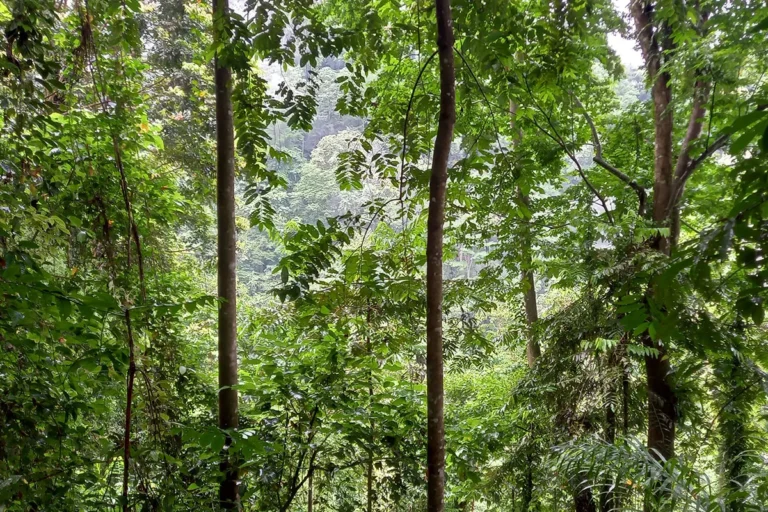
Our pepper comes from our plantation nearby the city of Santa Catarina, in the Lembá district of São Tomé, close to the Obô National Park. Here, we combine the natural characteristics of the forest pepper with careful agroforestry practices, growing the vines alongside our cocoa trees and working with local agricultural workers.
We do not use synthetic chemical inputs in our cultivation. From planting and care to harvesting, drying and packaging, our aim is to preserve the natural character and distinctive aroma of this exceptional São Toméan spice.
Difference Between Common Pepper and Wild Pepper
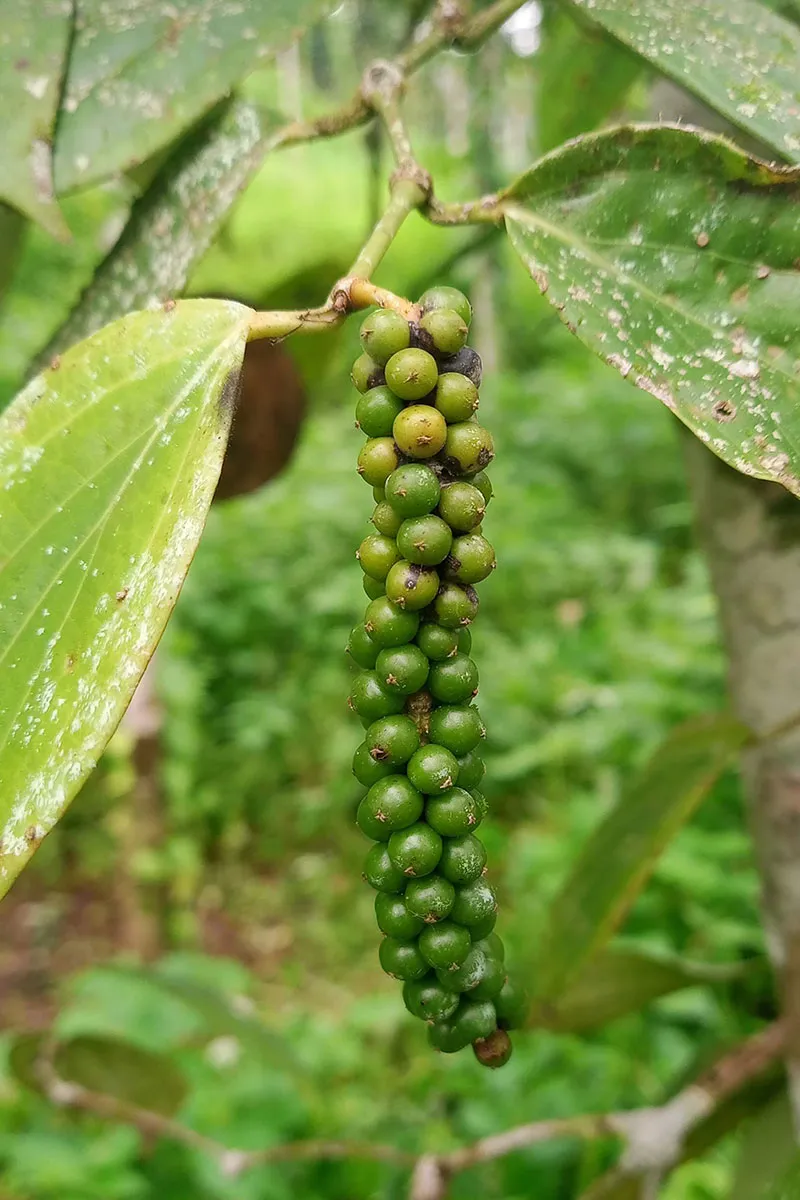
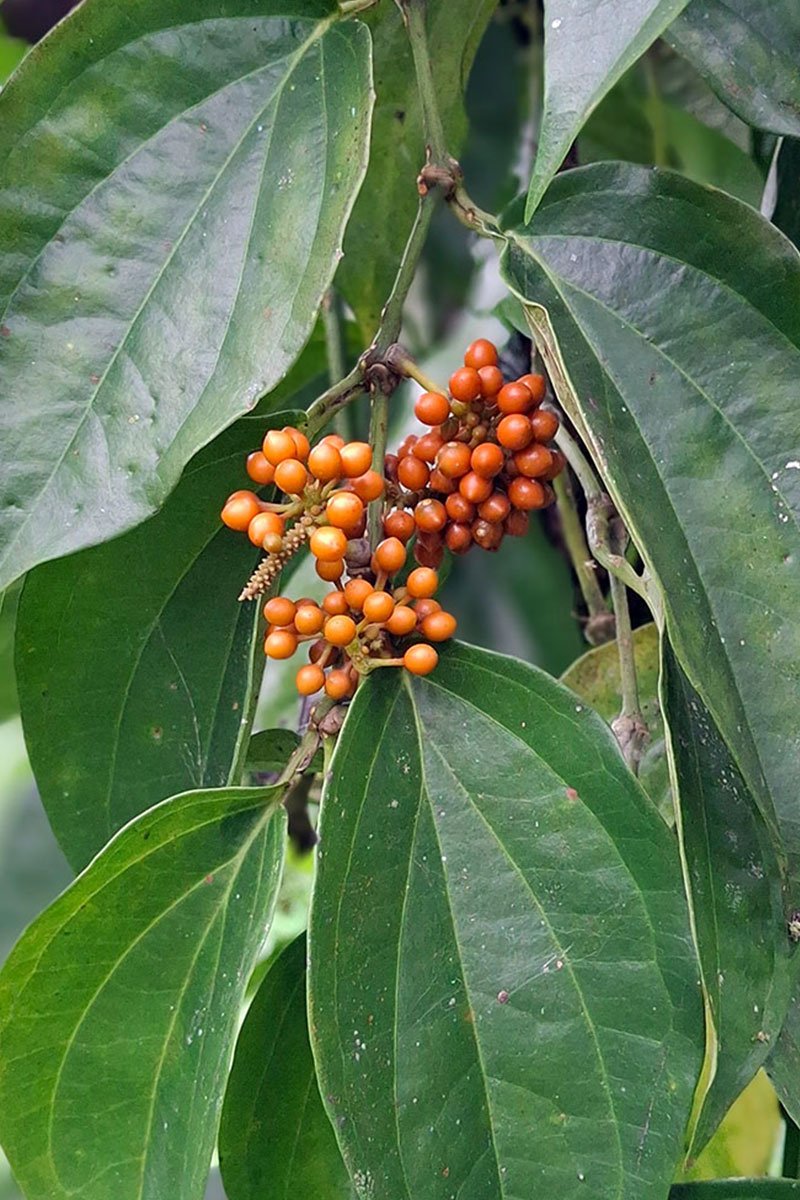
Common Black Pepper vs. Forest Wild Pepper
While black pepper (Piper nigrum) is widely cultivated and easy to produce, wild forest pepper (Piper guineense) is rarer and far more difficult to grow. Its fresh, minty aroma and refined, complex flavour give it a distinctive character that reflects both its natural scarcity and its unique origins.
Wild Pepper
A forest pepper from São Tomé
Piper guineense is an evergreen climbing plant naturally associated with the humid tropical forests of Africa. It grows by climbing through surrounding vegetation, using roots produced along its stems to support itself. Botanical references describe it as a plant of wet tropical environments, particularly evergreen forests and forest edges.
In São Tomé, it is traditionally known as pimenta-do-mato — forest pepper. It is also known locally as pimenta de Ôbo.
Across Africa, the same species is known under different names, including Ashanti pepper, Guinea pepper, African black pepper and, in Nigeria, uziza or iyere. These names reflect the plant’s long history in different African culinary and traditional cultures.
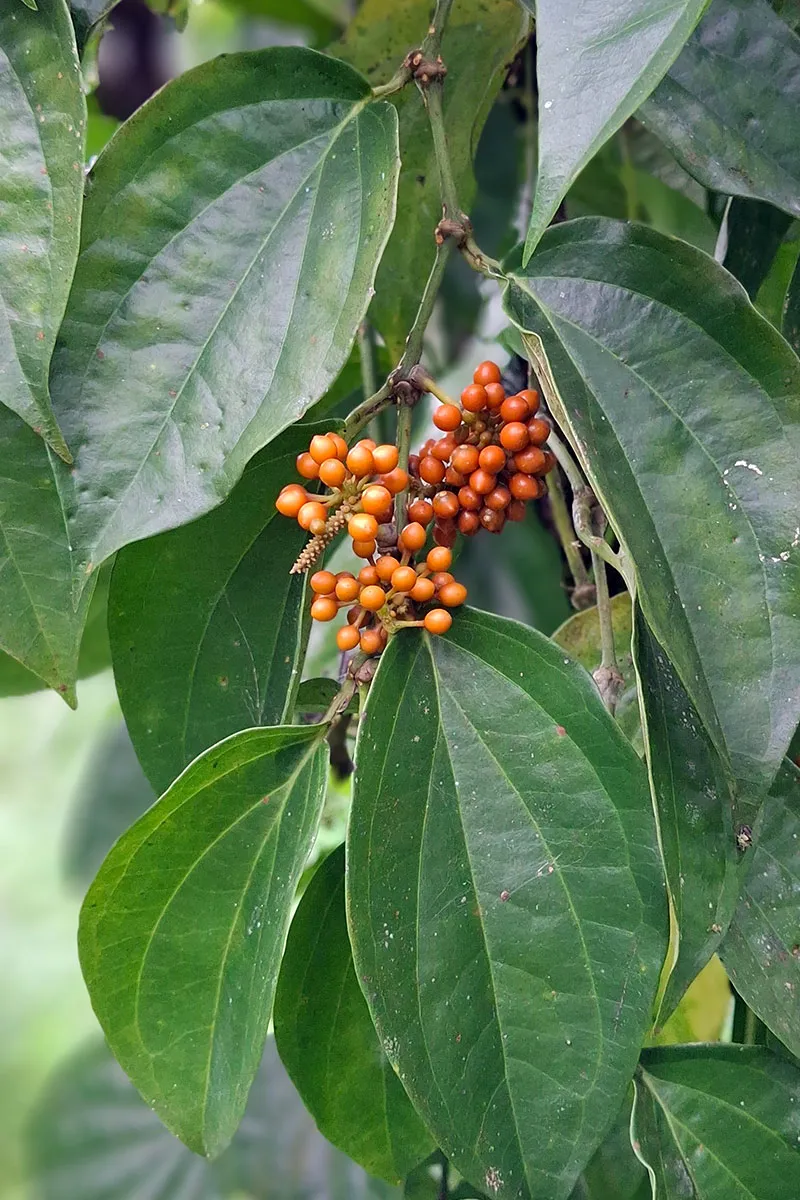
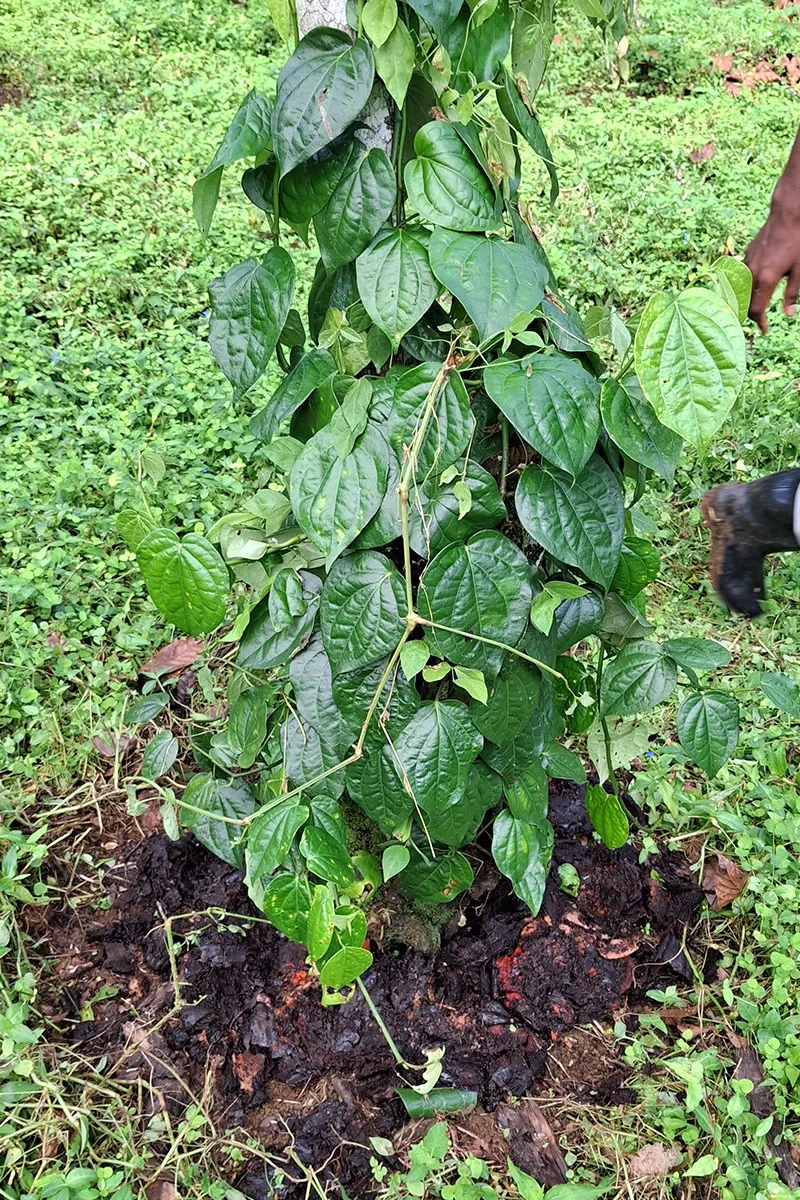
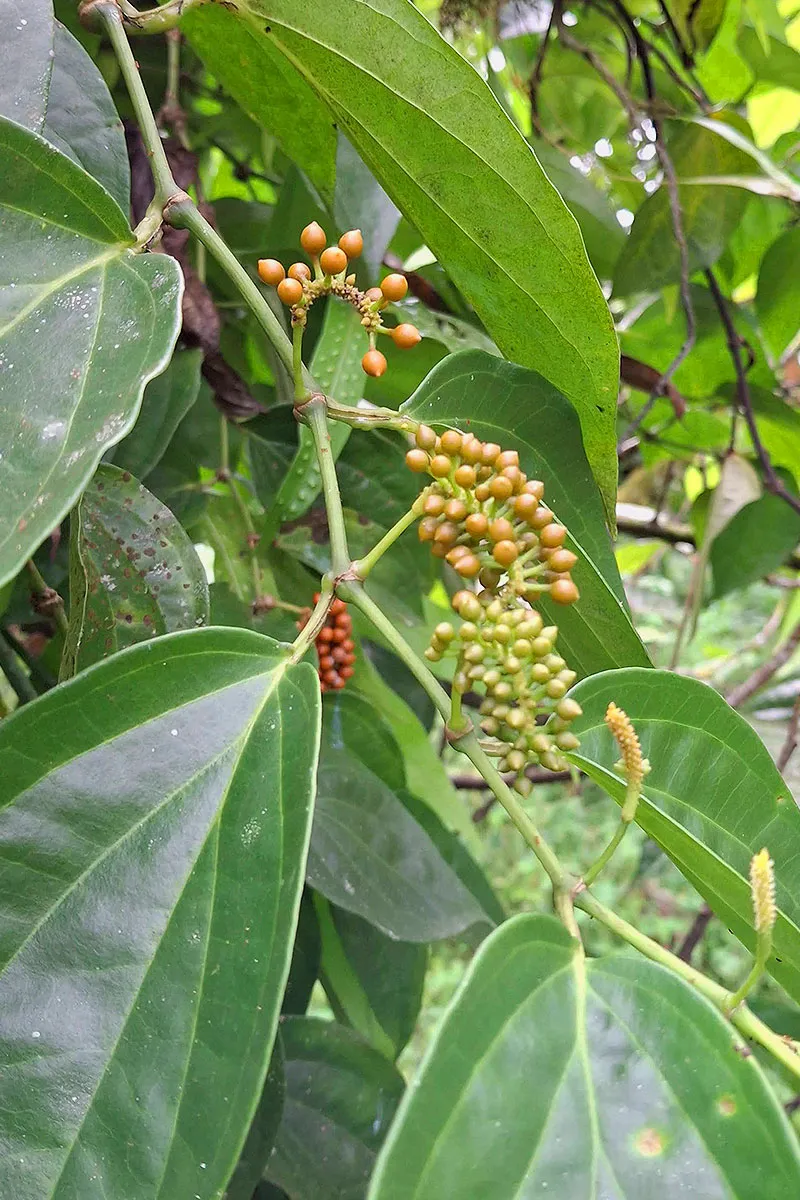
A naturally vigorous tropical vine
The pepper vine can climb several metres into the forest canopy. Its small fruits are produced along the stems and develop into characteristic peppercorns.
Unlike the familiar black pepper sold throughout the world, Piper guineense has its own distinctive aromatic profile. Its fruits contain a complex mixture of volatile oils and other natural compounds that contribute to its characteristic fragrance and pungency. Scientific reviews have identified compounds including dillapiole, linalool, myristicin and other aromatic constituents.
From wild forest to agroforestry
Our pepper begins with the forest.
In our plantation and surrounding areas, we collect young pepper plants from the surrounding forest and carefully replant them beneath our cocoa trees. The cocoa trees provide the natural structure the climbing vines need to develop.
The young vines are given time to establish themselves. After approximately two to three years, they reach the stage where fruit production can begin. We then manage the surrounding vegetation and carefully open the cocoa canopy to provide the additional light needed for flowering and fruit development.
In this way, our plantation remains closely connected to the natural environment from which the pepper originates.
A São Toméan forest tradition
Historically, São Tomé has also used the woody parts of the pepper plant as pau pimenta — “pepper stick”. Dried pieces of the vine can be added to slowly cooked dishes to release their characteristic flavour.
The forest pepper is therefore both a botanical treasure and part of São Tomé’s culinary heritage.